
Reset Your Workplace: Building a More Effective Office Cleaning Schedule
The start of a new year is a natural time for businesses to reset, refocus, and improve their operations. While many resolutions focus on productivity or growth, one often-overlooked area can have a significant impact on both employee well-being and business performance: office cleanliness. Creating or refining your office cleaning schedule is one of the most effective ways to set the tone for a healthier, more professional workplace in the year ahead.
An effective cleaning schedule does more than keep a space looking presentable. It supports hygiene, protects assets, improves indoor air quality, and ensures cleaning efforts are consistent rather than reactive. The key is building a schedule that reflects how your office actually functions.
Start With Your Office Environment
No two offices are the same, and a cleaning schedule should never be one-size-fits-all. Begin by evaluating your workspace. Consider factors such as the number of employees, daily foot traffic, shared spaces, and the nature of the work being done.
High-traffic offices, client-facing businesses, and shared work environments typically require more frequent cleaning than smaller or low-occupancy offices. Understanding how your space is used will help determine which areas need daily attention and which can be maintained on a weekly or monthly basis.
Daily Cleaning Tasks to Include
Daily cleaning focuses on hygiene, appearance, and safety. These tasks help prevent the buildup of dirt and germs while keeping the office presentable throughout the workweek.
Common daily cleaning tasks include:
- Emptying trash and recycling bins
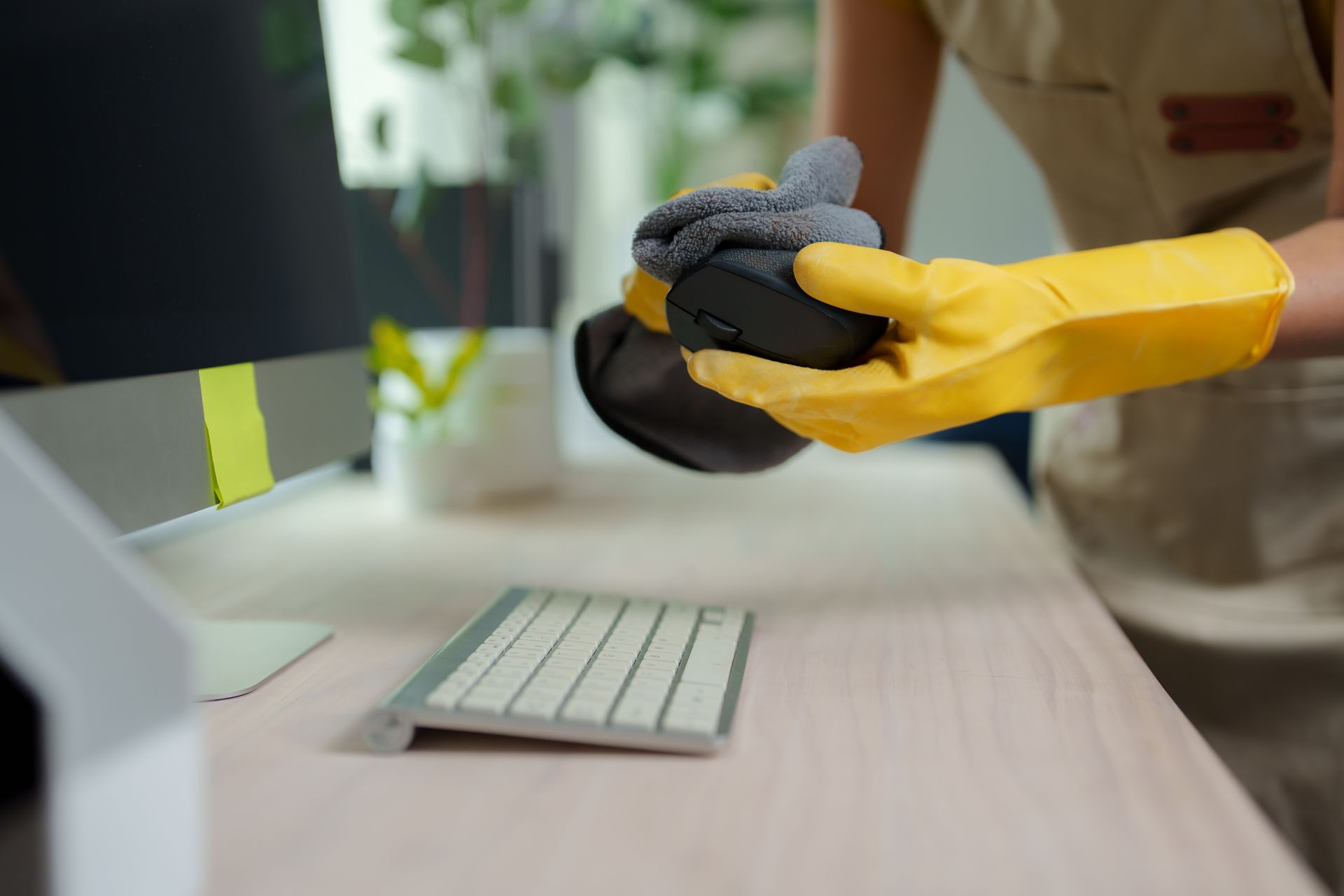
- Disinfecting high-touch surfaces such as door handles, light switches, and shared equipment
- Cleaning restrooms, including sinks, toilets, and countertops
- Wiping down breakroom surfaces and kitchen areas
- Spot-cleaning floors and entryways
Daily cleaning is especially important during flu season and in offices where employees share equipment or workstations.
Weekly Cleaning Priorities
Weekly tasks go beyond surface-level upkeep and help maintain the overall condition of your office. These services improve cleanliness while extending the life of flooring, furniture, and fixtures.
Typical weekly cleaning tasks include:
- Vacuuming carpets and rugs thoroughly
- Mopping hard floors
- Dusting desks, shelves, and office furniture
- Cleaning glass surfaces and interior windows
- Sanitizing conference rooms and shared spaces
Scheduling these tasks consistently prevents dirt buildup and keeps the office feeling fresh rather than “lived in.”
Monthly and Periodic Deep Cleaning
Monthly or quarterly deep cleaning is where long-term maintenance happens. These tasks address areas that are often overlooked but can significantly impact air quality, appearance, and overall cleanliness.
Deep cleaning tasks may include:
- Carpet shampooing or extraction
- Floor stripping and waxing
- High dusting vents, light fixtures, and ceiling corners
- Upholstery cleaning
- Detailed cleaning behind and under furniture
Including these services in your annual cleaning plan helps prevent costly repairs and preserves the professional appearance of your workspace.
Adjust for Special Areas and Use Cases
Different parts of an office often require different cleaning schedules. Restrooms, kitchens, and reception areas typically need more frequent attention than private offices or storage areas. Similarly, offices with hybrid schedules or fluctuating occupancy may benefit from flexible cleaning plans rather than rigid routines.
A strong cleaning schedule accounts for these variations and adapts as business needs change throughout the year.
Assign Responsibility and Set Expectations
A cleaning schedule is only effective if responsibilities are clearly defined. Whether cleaning is handled by an in-house team or a professional janitorial service, tasks should be documented and expectations clearly outlined.
This includes:
- Cleaning frequency
- Scope of services
- Quality standards
- Communication procedures
Clear documentation helps ensure accountability and consistency over time.
Review and Refine as the Year Progresses
Just like any New Year’s resolution, a cleaning schedule should not be “set and forget.” Regular reviews help identify gaps, adjust frequency, and respond to changes in office use. Seasonal shifts, staffing changes, or increased client traffic may all require updates to your plan.
A Cleaner Start to the Year
Creating a thoughtful cleaning schedule is a simple but powerful way to invest in your workplace. It promotes a healthier environment, supports employee morale, and reinforces a professional image for clients and visitors alike.
As the new year begins, a proactive approach to office cleaning sets the foundation for consistency, efficiency, and long-term success—one clean workspace at a time.