
How Often Should a Medical Office Be Professionally Cleaned?
Cleaning frequency in a medical office isn't a one-size-fits-all schedule. A waiting room chair, an exam table, and a restroom all carry different levels of contamination risk, and treating them all the same way — cleaned once a day, once a week, whatever's convenient — leaves gaps that a standard office cleaning schedule simply wasn't built to catch.
Here's a realistic breakdown of how often different areas of a medical practice actually need attention.
Daily Cleaning: The Non-Negotiables
Some areas need disinfection every single day, without exception, because they see constant patient contact:
- Exam rooms. Tables, counters, and equipment surfaces need to be disinfected between patients throughout the day, with a more thorough clean at day's end.
- Waiting room and reception area. Chairs, counters, door handles, and check-in surfaces get touched constantly and need daily disinfection at minimum.
- Restrooms. These require daily cleaning and disinfection as a baseline, with high-traffic practices needing multiple touch-ups throughout the day.
- High-touch surfaces. Light switches, door handles, elevator buttons, and shared equipment should be wiped down daily as part of a standard routine.
Several Times a Week: Common Areas and Equipment
Some spaces don't need the same intensity as an exam room but still require regular attention beyond a once-a-week pass:
- Break rooms and staff areas. Shared spaces like microwaves, refrigerator handles, and countertops benefit from cleaning several times a week, especially in larger practices.
- Floors in hallways and common areas. Regular vacuuming or mopping keeps dirt and contaminants from accumulating between deeper cleanings.
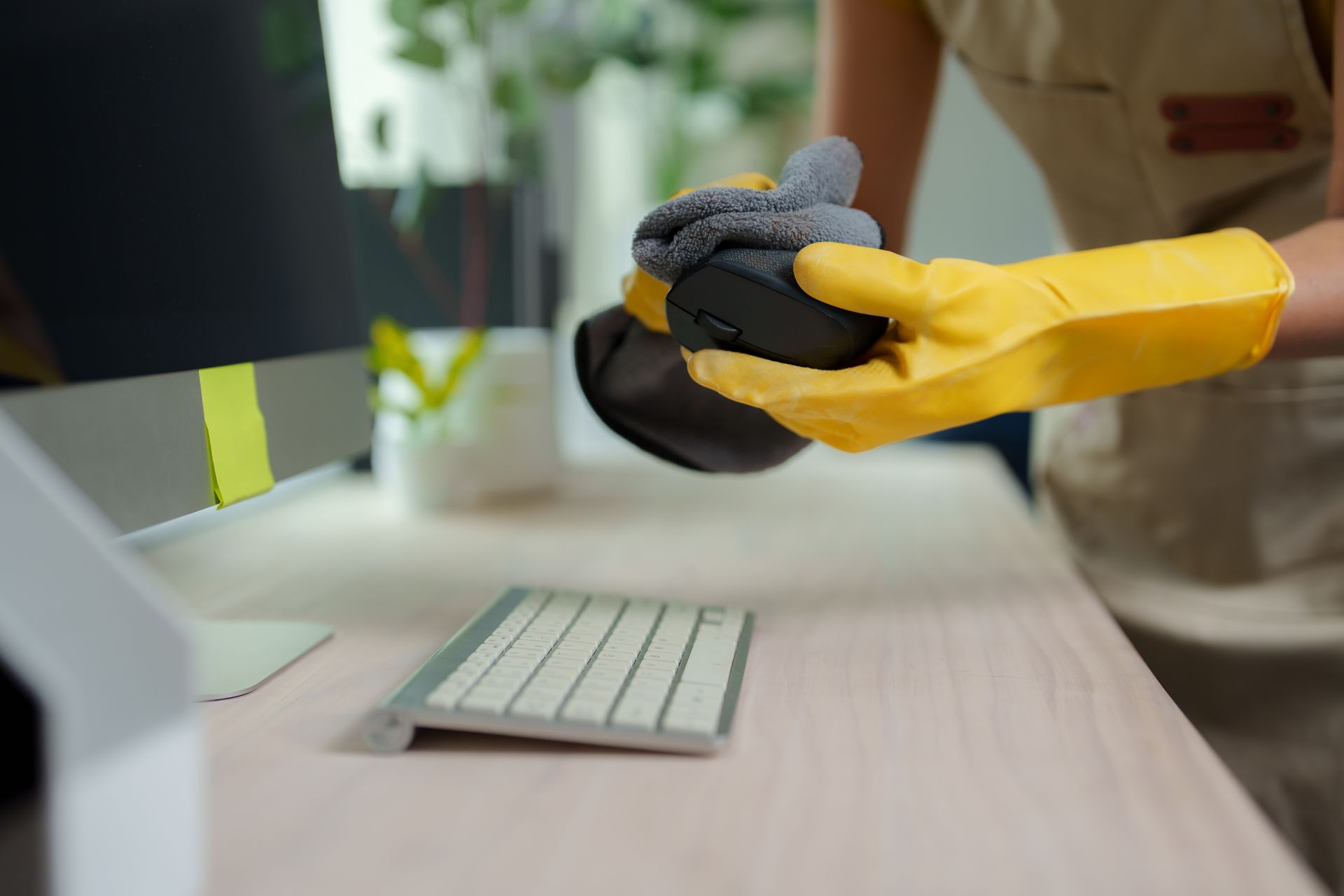
- Medical equipment surfaces not used directly on patients (monitors, computer keyboards, phones) should be wiped down multiple times a week to reduce buildup.
Weekly: Deeper Attention Areas
A weekly cleaning cycle typically covers tasks that don't need daily repetition but still can't wait a full month:
- Baseboards, vents, and light fixtures, where dust accumulates gradually
- Upholstered furniture in waiting areas, which traps particles that daily surface wiping doesn't address
- Detailed floor cleaning, including edges and corners that daily mopping tends to miss
Monthly or Quarterly: Deep Cleaning
Beyond routine cleaning, most medical practices benefit from a more intensive deep clean on a monthly or quarterly basis:
- Carpet and upholstery deep cleaning, which removes buildup that regular cleaning can't fully address
- Window cleaning, both interior and exterior
- Full disinfection of less-frequently touched areas, like storage rooms, supply closets, and equipment rarely used day to day
- HVAC vent cleaning, since air quality plays a role in infection control that's easy to overlook
Why Frequency Should Match Risk, Not Convenience
The underlying principle behind all of this is simple: cleaning frequency should be based on contamination risk and patient contact, not just staff convenience or what's easiest to schedule. An exam room and a supply closet don't carry the same risk, and a cleaning plan that treats them identically is either wasting effort in low-risk areas or leaving real gaps in high-risk ones.
Building a Schedule That Actually Fits Your Practice
Every medical practice has a different patient volume, layout, and set of high-touch areas, which means the "right" cleaning frequency looks a little different for each one.
At America's Janitorial Service, we build cleaning schedules specifically around a practice's patient flow and risk areas, using hospital-grade disinfectants and protocols designed for clinical environments — not a generic office cleaning template. If your current cleaning schedule hasn't been reassessed in a while, reach out and we'll help you build one that actually matches your practice's needs.